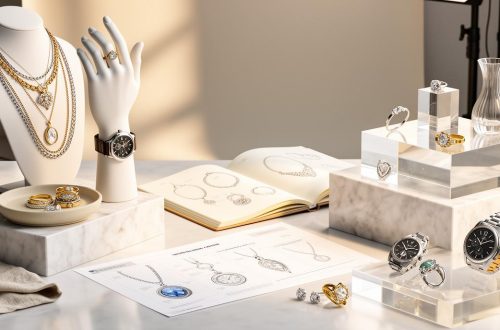
Your Fingerprint, Their Heartbeat: A Guide to Fingerprint Jewelry
Every person carries a pattern on their fingertips that cannot be replicated, even between identical twins. This tiny map of whorls, loops, and arches is more than a biological signature; it is a physical record of touch, presence, and identity. Fingerprint jewelry transforms that one-of-a-kind pattern into a wearable piece of art, creating an intimate connection that photographs and handwritten notes cannot always match. Whether it is made to remember someone who has died, celebrate a newborn, or simply keep a partner close, this form of personalized jewelry has grown into one of the most meaningful keepsakes available today.
Unlike standard engraved names or dates, fingerprint jewelry captures something deeply physical. The same ridges that once held yours or a loved one’s hand become part of a pendant, ring, or bracelet. The result is not only visually distinctive but emotionally resonant: wearers can literally press their thumb against the textured surface and feel the lines that belong to another person.
What Makes Fingerprint Jewelry So Deeply Personal
At first glance, a fingerprint may seem like a simple mark. Under magnification, however, it reveals a complex pattern of ridges, bifurcations, and minute details that make it entirely unique. This is why fingerprint jewelry carries a different emotional weight than other types of engraving. A name can be shared by thousands of people, and a date can mark many events, but a fingerprint belongs to only one individual.
The emotional appeal begins with the sense of touch. Human beings associate touch with safety, love, and connection. When a fingerprint is impressed into metal, it creates a tactile surface that invites the wearer to rub a thumb across it during moments of reflection or stress. Many people describe the habit of touching a fingerprint pendant as a way of “checking in” with the person it represents. That small physical gesture can feel like reaching out and making contact across distance or loss.
For those who are grieving, fingerprint jewelry offers a private, portable form of remembrance. It is not obvious to strangers, and it does not require explanation. A woman wearing a small silver disc with her late father’s fingerprint can carry his presence into ordinary days: the morning commute, a hospital appointment, a family wedding. The jewelry becomes a quiet companion. In this way, it often helps people move through grief without having to verbalise their loss to everyone they meet.
For families, fingerprint pieces also preserve a sense of continuity. Parents may order a necklace featuring the print of a young child before they grow older, capturing a moment in time. Partners may exchange rings stamped with each other’s fingerprints before deployment, relocation, or long-term travel. Because the ridges on a fingertip do not change as a person ages, the impression remains a permanent link to the person at any stage of life. That permanence is central to the appeal: while digital photos can be lost and handwriting may fade, a fingerprint impressed into metal is designed to endure.
How Fingerprint Jewelry Is Crafted From Impression to Heirloom
The journey of a fingerprint into a finished piece of jewelry involves careful handling and skilled craftsmanship. The process usually begins with capturing a clear impression of the print. This may be done with an ink pad, a special impression compound, or a digital photograph. In some cases, families already have a fingerprint on file from a hospital, funeral home, or memory kit. Artisans then clean and refine that image to ensure the ridge lines are distinct enough to be reproduced in miniature.
Once the fingerprint has been captured, it is digitally prepared and resized to fit the chosen piece. Skilled designers pay close attention to the depth and contrast of the ridges, because a fingerprint that looks clear at full size can become blurred when reduced to the surface of a small pendant or ring. The best pieces preserve enough detail that the print remains recognisable and tactile, even when it is engraved at a very small scale.
The chosen medium then influences the final appearance. Sterling silver is popular for its bright finish, affordability, and ability to show crisp detail. Yellow gold, rose gold, and white gold add warmth and a sense of luxury, while platinum offers exceptional durability for rings and bands that will be worn daily. Some pieces are created through laser engraving, which etches the fingerprint onto a flat or gently curved surface. Others are cast from a three-dimensional impression, producing a raised or recessed texture that feels more sculptural. Both methods have their strengths, and the right choice depends on how the wearer wants the print to feel and look.
Hand-finishing is another important part of the process. After engraving or casting, the jewelry is polished, cleaned, and inspected. Edges are softened, and the fingerprint area is checked to make sure the ridges are neither too sharp nor too shallow. This attention to detail is what separates a meaningful keepsake from a novelty item. When selecting fingerprint jewelry, it is worth looking for artisans who treat each print as an individual commission rather than a rushed template. The result should feel personal in both design and execution, with the fingerprint clearly visible and the surrounding metal smooth against the skin.
Because fingerprints are so personal, reputable makers also understand the need for discretion and care. Families often send prints during emotionally difficult periods, shortly after a bereavement or immediately before a loved one moves away. A clear, compassionate process — from print submission to final delivery — can make a significant difference. The best pieces arrive beautifully presented and ready to be worn, with the fingerprint protected by quality materials that are intended to last for years.
Choosing Fingerprint Jewelry for Different Moments and People
Fingerprint jewelry is often associated with memorial gifts, but its uses extend far beyond loss. One of the reasons it has become so popular is its versatility. A fingerprint can be incorporated into a necklace, ring, bracelet, cufflinks, or keyring, making it suitable for men, women, and children. The design can be minimal and modern, or more traditional, depending on the recipient’s style.
For parents, a fingerprint charm featuring a newborn’s print is a particularly tender keepsake. These pieces capture a stage that passes quickly, preserving the tiny ridges of a baby’s finger before the hand grows and changes. Mothers and grandmothers often wear them as layered necklaces, pairing a child’s fingerprint disc with a birthstone, initial, or date tag. The result is personal without being overly sentimental in appearance, and it can be worn every day rather than stored in a drawer.
For couples, fingerprint jewelry can mark a commitment or a separation. Engraved rings with each partner’s print are increasingly chosen as wedding bands or anniversary gifts. Because the ring is worn close to the skin, it offers a more intimate connection than a standard inscription. In long-distance relationships, a pendant containing one partner’s fingerprint can serve as a physical reminder of touch when physical closeness is not possible. The texture of the print provides something to hold, stroke, and focus on during moments of missing the other person.
In bereavement, the choice of fingerprint jewelry is often guided by how the wearer wishes to remember the person. Some prefer a classic round pendant with the print on the front and an engraved message on the back. Others choose a ring that places the fingerprint on the inside of the band, so it rests against the skin and remains private. A parent who has lost a child may select a small fingerprint charm that can be worn over the heart, while a widow or widower might wear a fingerprint band alongside a wedding ring. These pieces give the grieving person control over how visible or hidden they want their remembrance to be.
Practical considerations matter too. Rings and bracelets worn daily should be made from a durable metal and should be sized comfortably. Pendants often work well for active lifestyles because they can be tucked under clothing or removed easily. Cufflinks and keyrings make meaningful gifts for men who may not wear a necklace. Across the UK, families choose fingerprint jewelry for funerals, anniversaries, christenings, Mother’s Day, Father’s Day, and Christmas. Whatever the occasion, the unifying idea is the same: a fingerprint is not just a mark; it is a trace of a life, a touch, and a connection that deserves to be carried forward.

Born in Taipei, based in Melbourne, Mei-Ling is a certified yoga instructor and former fintech analyst. Her writing dances between cryptocurrency explainers and mindfulness essays, often in the same week. She unwinds by painting watercolor skylines and cataloging obscure tea varieties.

Mei-Ling Han
Born in Taipei, based in Melbourne, Mei-Ling is a certified yoga instructor and former fintech analyst. Her writing dances between cryptocurrency explainers and mindfulness essays, often in the same week. She unwinds by painting watercolor skylines and cataloging obscure tea varieties.